
How to Choose Pressure vs Open Fryers for Fried Chicken

Fried chicken kitchens do not struggle because of demand. They struggle when the equipment cannot support production during peak periods. When cook times stretch, oil recovery slows, or batches back up, the fryer becomes the limiting point on the line.
Choosing between a pressure fryer and an open fryer is about operational fit. Each system supports different cooking conditions. Understanding how each performs under real service pressure helps operators determine the best fryer for their fried chicken concept.
What a Pressure Fryer Does
A pressure fryer cooks food in oil inside a sealed vessel. As pressure rises, the boiling point of water increases. This reduces moisture loss and changes how heat transfers inside the product.
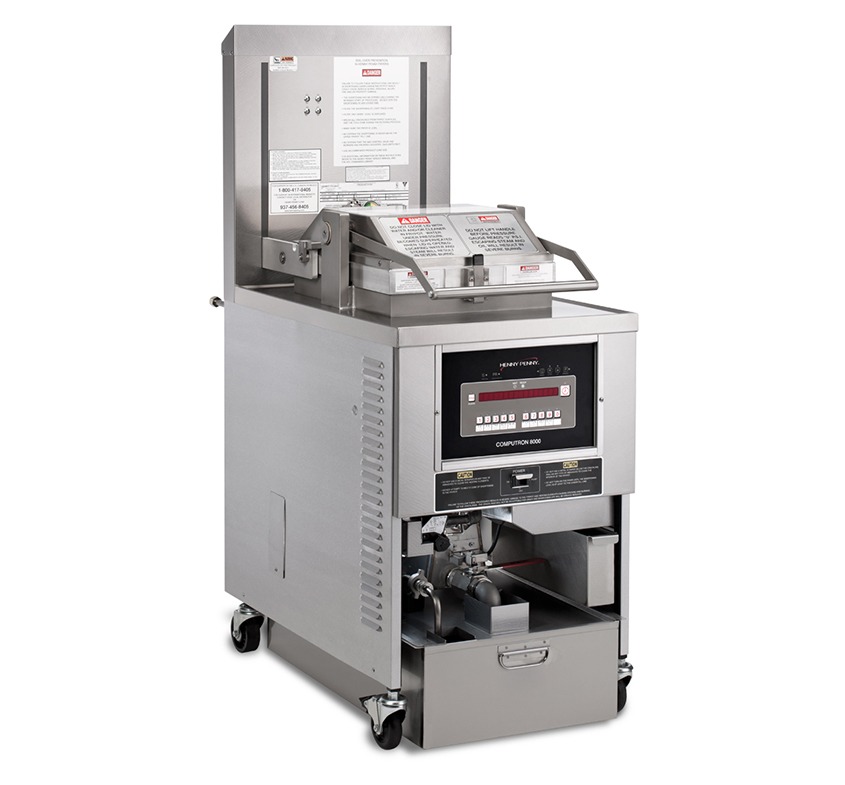
For bone-in chicken, this often results in shorter cooking times than open frying. The enclosed environment also limits exposure to air and temperature fluctuation, which supports consistent results across batches.
Pressure frying is commonly used when bone-in chicken drives production and must move steadily during service.
What an Open Fryer Does
An open fryer cooks food in oil in an unsealed vat. The product remains exposed to the atmosphere, allowing moisture to escape more freely.
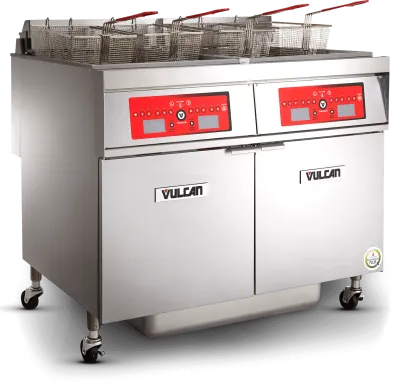
This method delivers a strong exterior texture and supports a broad range of fried items. Kitchens that prepare multiple fried categories often rely on open fryers for flexibility.
Because the cooking area is visible and accessible, operators can monitor product and make adjustments during service.
Cook Time and Peak Production
Bone-in chicken requires longer cook times than boneless products. In an open fryer, oil temperature and product thickness determine those cycles. During peak periods, longer cycles can limit the number of batches completed within a service window.
Pressure frying alters the cooking environment. Increased pressure allows bone-in chicken to cook more quickly while retaining moisture. In high-volume fried chicken equipment applications, shorter cycles can reduce production bottlenecks during rush periods.
Operations with moderate chicken demand or broader menus may not experience the same constraints. Production patterns determine whether differences in cook time materially affect service.
Oil Performance and Cost Impact
Oil management directly affects food quality and operating cost.
Pressure fryers often operate at lower temperatures and limit oxygen exposure inside the sealed vessel. These conditions slow oil degradation. Reduced moisture loss may also decrease oil absorption under certain conditions.
Open fryers expose oil directly to heat and air. Sustained bone-in production often requires more frequent filtering and replacement. With disciplined maintenance and temperature control, open fryers still perform effectively, but oil performance depends more heavily on operating practices.
When evaluating the best fryer for a foodservice operation, oil performance should reflect actual volume and maintenance routines.
Menu Fit and Concept Structure
Menu composition often clarifies the decision.
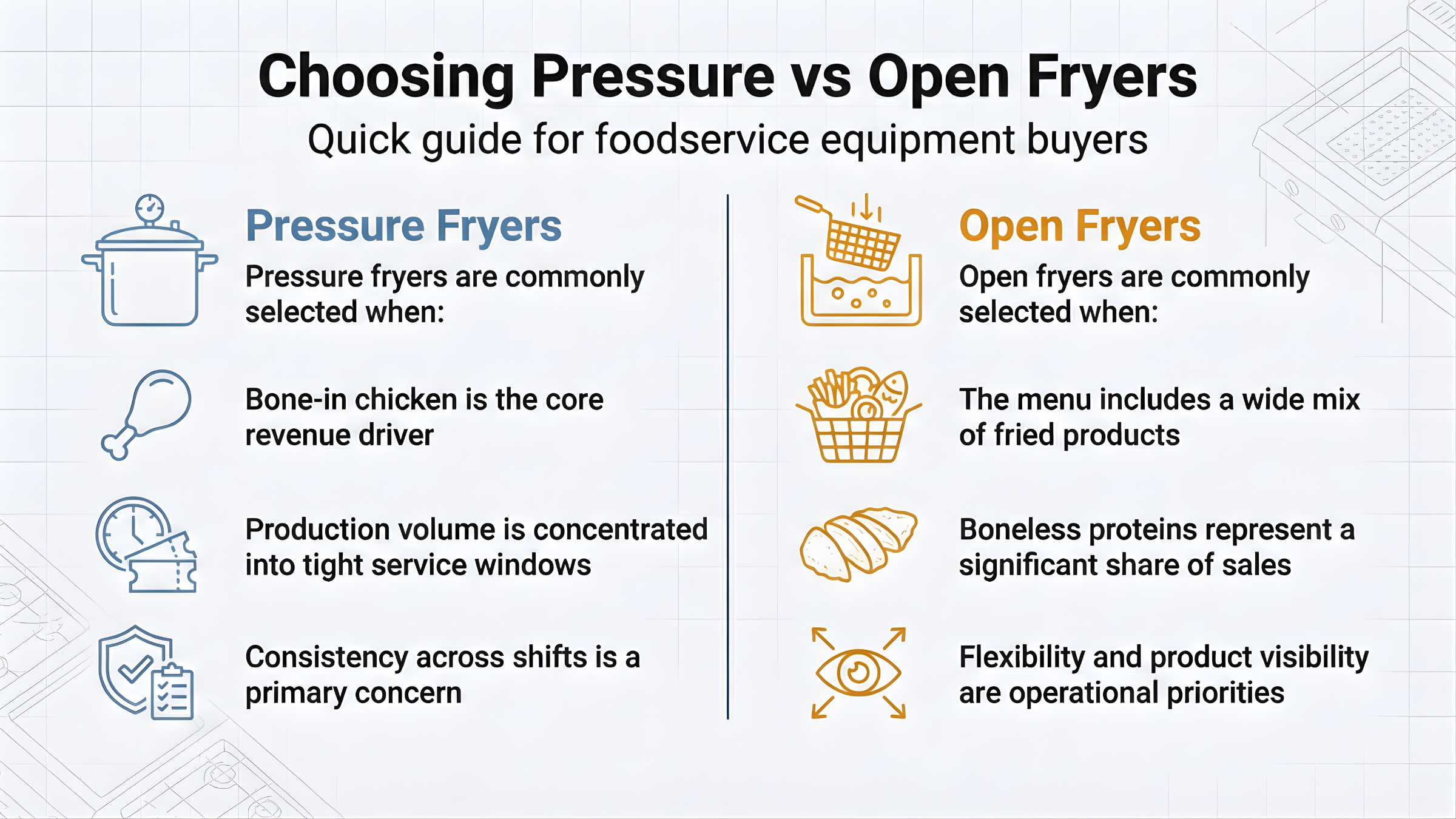
Some operations use both systems to support different categories. The deciding factor is whether fried chicken anchors production or shares space within a broader menu.
Training and Operational Considerations
Both fryer types require training and safety procedures.
Modern pressure fryers include automated controls, programmed cook cycles, and built-in safety interlocks. These features reduce operator variability and support consistent execution.
Open fryers are mechanically straightforward and familiar to kitchen staff. However, they require attention to load size, oil temperature recovery, and timing, particularly during peak periods.
Operational complexity depends less on fryer type and more on how well the equipment aligns with staffing levels and service intensity.
Choosing Based on Operational Reality
The best fryer for fried chicken depends on how the kitchen operates.
Pressure fryers and open fryers both produce high-quality fried chicken. The right choice depends on menu mix, production volume, and peak-hour demand.
High volumes of bone-in chicken often lead operators to choose pressure fryers for reduced cook times and moisture retention. Diverse menus or moderate chicken demand often lead operators to select open fryers for flexibility.
Both systems can produce strong results. The appropriate choice supports your menu structure, peak-hour production demands, and oil management strategy.
Frequently Asked Questions About Pressure and Open Fryers
What is the difference between a pressure fryer and an open fryer?
A pressure fryer cooks in hot oil within a sealed vessel, increasing internal pressure and reducing moisture loss. An open fryer cooks in hot oil in an unsealed vat, where moisture escapes freely, and the product remains exposed to air.
How do I choose the best fryer for fried chicken?
The best fryer for fried chicken depends on what you fry most often and how demand is distributed across the day. Pressure fryers are commonly selected for high volumes of bone-in chicken during tight peak windows. Open fryers are chosen for broader menus that include multiple fried products and boneless items.
Does pressure frying use less oil than open frying?
Pressure frying can reduce oil absorption and may extend oil life because the system is sealed and often operates at lower temperatures. Total oil usage still depends on volume, filtering practices, cooking procedures, and oil management discipline.
