
The 7 Steps of the Commercial Kitchen Project Process

Every successful foodservice build follows a structured path. The commercial kitchen project process connects discovery, design, budgeting, procurement, fabrication, installation, and commissioning so the kitchen runs efficiently, supports consistent service, and generates stronger long-term return on investment.
Why Kitchen Projects Often Lose Momentum
Building a commercial kitchen requires more than selecting equipment. Consultants, designers, contractors, fabricators, and suppliers all contribute to the project, and each group controls a different part of the work.
Without strong coordination, problems appear quickly. Equipment may arrive before utilities are ready. Ventilation plans may conflict with architectural layouts. Fabrication timelines may drift away from construction schedules.
Foodservice construction requires several disciplines to work in sequence. When teams manage those pieces independently, small gaps in coordination can lead to delays, redesigns, and budget surprises.
A structured commercial kitchen project process reduces that risk. When each stage connects clearly to the next, projects move from concept to opening day with fewer disruptions.
What Is the Commercial Kitchen Project Process?
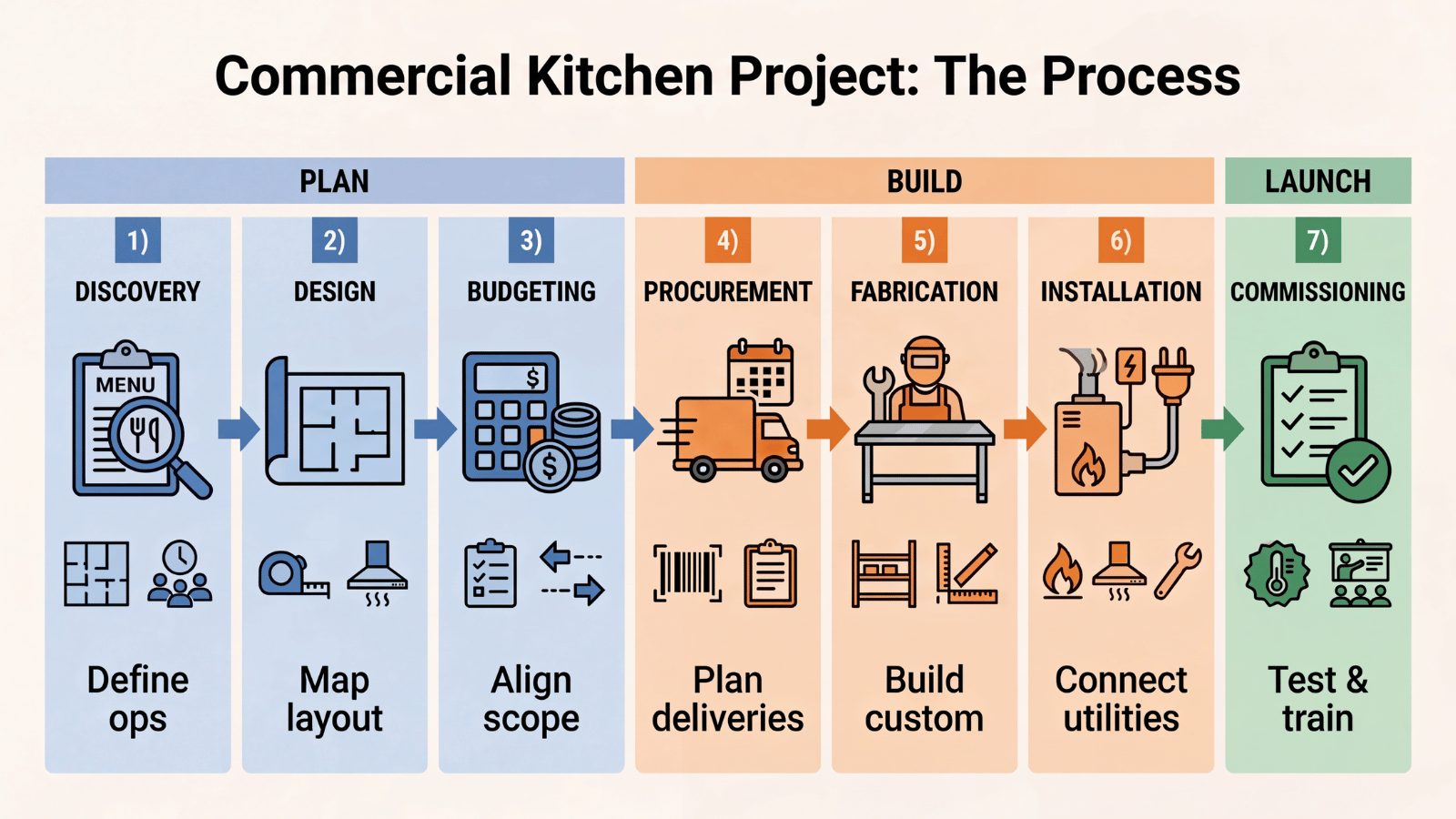
The commercial kitchen project process is the structured sequence used to plan, design, build, and install a commercial foodservice kitchen. Most projects move through seven steps: discovery, design, budgeting, procurement, fabrication, installation, and commissioning. Each phase builds on decisions made earlier in the project, so the build progresses from concept to opening in a predictable way.
Step 1: Discovery Defines Kitchen Operations
Discovery translates a restaurant concept into operational requirements. Consultants and project teams examine the menu, service style, staffing model, and projected production volume to determine what the kitchen must support daily.
Different concepts require different layouts. A fast casual restaurant with heavy lunch traffic demands a different workflow than a fine dining kitchen or a delivery-focused ghost kitchen. Equipment capacity, prep areas, and cooking stations must reflect those realities.
During discovery, project teams evaluate menu complexity, production methods, peak service periods, and staff workflow. They also assess space limitations and building constraints.
Step 2: Kitchen Design Turns Workflow Into Layout
Kitchen design converts operational planning into a physical working environment. Designers use insights from discovery to determine equipment placement, production flow, and infrastructure requirements.
The objective is not simply to place equipment inside a room. The layout must support efficient staff movement, consistent production, and safe working conditions.
Equipment specifications must align with available utilities. Ventilation systems must support cooking equipment. Workstations must allow staff to move efficiently between prep, cooking, plating, and service areas.
Step 3: Budgeting Aligns the Project Scope
Budgeting connects the kitchen design with financial reality. Project teams develop a detailed cost structure that includes equipment, fabrication, installation, and infrastructure upgrades.
This stage helps operators understand how design decisions influence the total project investment. Adjustments often occur as teams refine equipment selections or modify production areas.
Each change can affect utilities, fabrication requirements, and installation schedules. Keeping the project scope clearly defined during budgeting helps prevent costly revisions later in the build.
Step 4: Equipment Procurement Coordinates Lead Times
Procurement focuses on equipment ordering and delivery coordination. Project teams confirm specifications, place equipment orders, and track manufacturer lead times.
Delivery schedules must align with construction progress so equipment arrives when installation can begin. If the equipment arrives too early, installers cannot place it. If deliveries arrive late, construction timelines may slip.
Lead times vary depending on equipment type and order complexity. Careful procurement planning helps maintain the overall project schedule.
Step 5: Fabrication Builds Custom Kitchen Components
Most commercial kitchens require custom-built components to complete the layout. Fabrication may include stainless steel work tables, shelving systems, counters, service stations, and specialized prep areas.
Fabricators must match these components precisely to the kitchen design and the physical construction environment.
Fabrication often runs alongside other construction work. Coordinating fabrication schedules with building progress ensures the components arrive when installation begins.
Step 6: Kitchen Installation Connects Equipment and Utilities
During installation, contractors deliver equipment, position it within the layout, and connect it to electrical, gas, plumbing, and ventilation systems. This stage brings together every decision made during planning and design.
Technicians integrate hood systems with cooking equipment while installers position fabricated components throughout the kitchen.
Precision matters during installation. Even small differences between design plans and field conditions can slow progress. Strong coordination helps project teams resolve issues quickly and keep the schedule moving.
Step 7: Commissioning Prepares the Kitchen for Opening
Commissioning confirms that the kitchen operates as intended before service begins. Technicians test equipment, verify utility connections, and complete safety checks.
Staff may also receive training during this stage so the kitchen team understands how to operate new equipment efficiently.
Inspectors review the facility to confirm compliance with health and safety regulations. After final approvals, the kitchen is ready to support daily service.
Why Coordinated Foodservice Project Management Matters
Commercial kitchens combine specialized equipment, complex utilities, and high-volume production environments. Each stage of development depends on decisions made earlier in the project.
When teams coordinate design, procurement, fabrication, and installation through a unified process, projects move forward with fewer surprises. Timelines stay predictable, budgets remain closer to plan, and the finished kitchen supports efficient daily operations.
Understanding the commercial kitchen project process gives consultants and operators a clear roadmap for navigating the complexity of a foodservice build. With careful coordination from planning through commissioning, the result is a kitchen designed to deliver consistent service and long-term operational performance.
Frequently Asked Questions About Commercial Kitchen Projects
What is the process for a commercial kitchen project?
The commercial kitchen project process is the structured sequence used to plan, design, build, and install a professional foodservice kitchen. It typically includes seven steps: discovery, design, budgeting, procurement, fabrication, installation, and commissioning.
How long does a commercial kitchen installation timeline take?
A commercial kitchen installation timeline varies depending on project size, equipment lead times, and construction schedule. Most projects take several months from early planning through commissioning, with delays most common when procurement, fabrication, and construction schedules fall out of sync.
Why is foodservice project management important for kitchen builds?
Foodservice project management keeps designers, contractors, and equipment suppliers aligned throughout the build. Strong coordination helps control timelines, prevent installation conflicts, and ensure the finished kitchen supports efficient daily operations.
Get your commercial kitchen project started and schedule time to talk to the Alto-Hartley team.
